

Trapezoidal thread power screw — fixed nut length
Tightening/loosening torque, thread efficiency, contact pressure and sliding-wear service life of a trapezoidal-thread power screw (nut length fixed at 44 mm, matching the original locked demo).
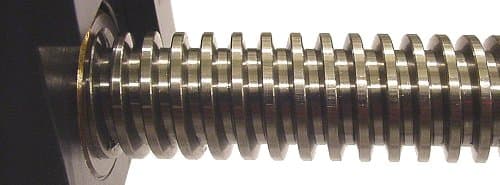
Nut length is fixed at 44 mm (not exposed as an input): the legacy "please login" demo lock freezes the L_nut variable, but the source never actually uses that variable in the formula — the engaged-thread-count term `i = 44/P` hardcodes the literal 44 directly, so L_nut has no effect on the result even with the lock lifted. Exposing an editable-but-inert control would be misleading, so this port fixes it accordingly. All other inputs were genuinely free under the lock and remain so.
Method & references
- Trapezoidal power-screw thread: tightening/loosening torque, efficiency, contact pressure and sliding-wear service life.
- Mechanical properties of metals reference table
- Power screw — torque, safety factor and service life (same mechanism, nut length free)
The computation is a literal port of the original client-side JavaScript from /calculators/e3_7.htm. Results are verified equal to the original by an automated golden-master test. No formula has been re-derived or “improved”.